Showing posts with label eden prairie home inspection. Show all posts

Tuesday, September 13, 2011

Gutters help to prevent walls from rotting too...


While everyone thinks about gutters being one of the most important aspects of maintaining a dry basement, gutters can also play a major role in preventing water intrusion at the exterior of the home.
As water drains off the roof and hits hard surfaces next to the house, such as decks and patios, a lot of water splashes against the house in an unnatural manner.  Houses are designed to shed water from the top down.  When water travels up against a house or sideways, it can have a devastating effect.
One of the worst areas that I regularly find problems with is where a roof valley dumps water on to a deck, and the water splashes against a patio door.  This will almost always rot the door and  the wall around it.  When gutters are installed and maintained, this doesn’t happen.
My inspiration for this post came from a nineteen year old home that I recently inspected in Eden Prairie.  The home didn’t have any gutters, and water drained down from the roof right on to the wood deck.  I noticed some tiny trees growing out of the intersection between the deck and the house, so I suspected there was a nasty mess behind the siding.  Click on the photo below for a larger version.
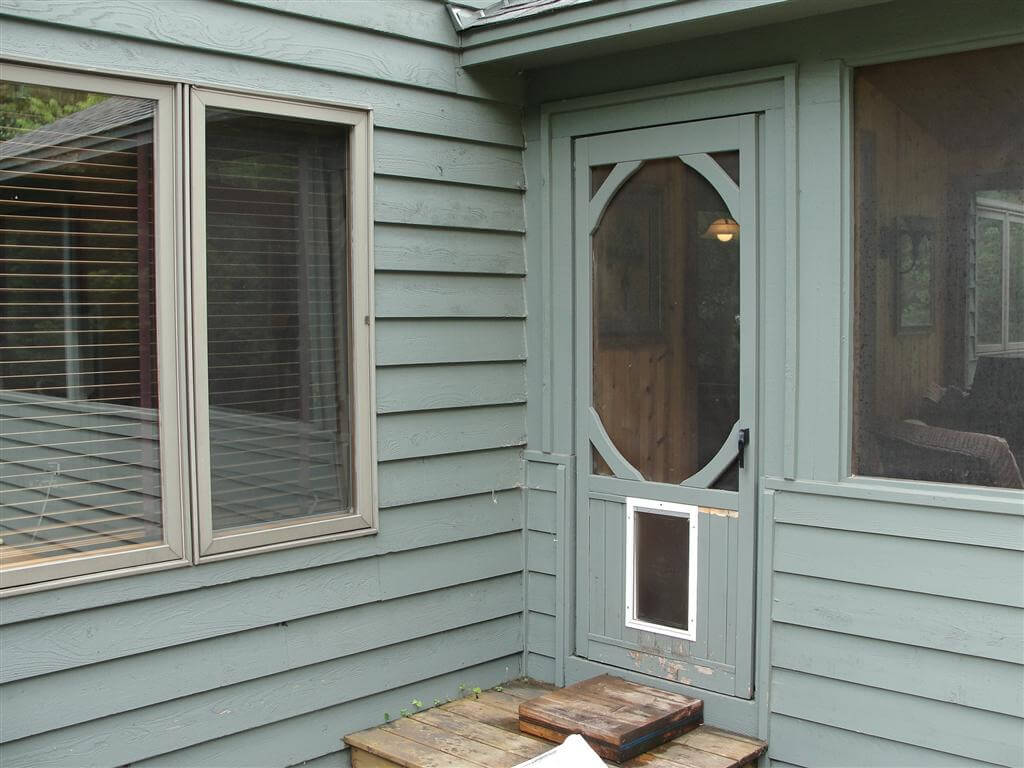
Tiny trees growing at deck
I told the buyer to have the wall opened up by a carpenter before proceeding with his purchase, so he could get an idea of the scope of the damage.  The buyer met the carpenter at the house, and was kind enough to send me a few photos of the wall with the siding removed.
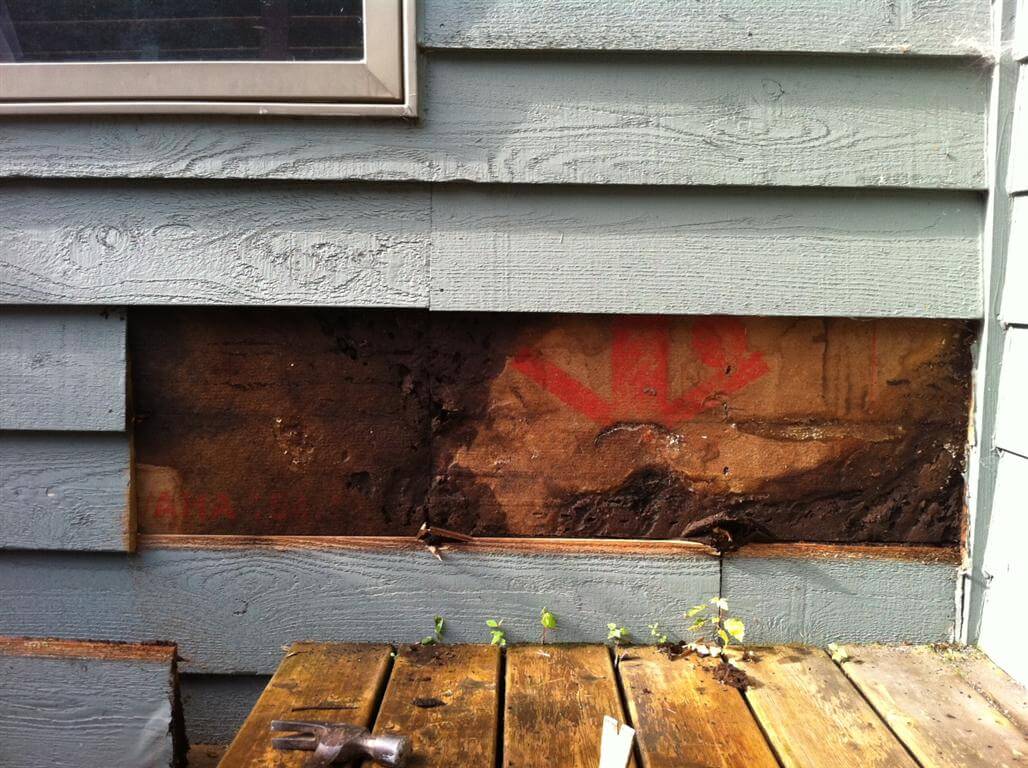
Water damage at wall
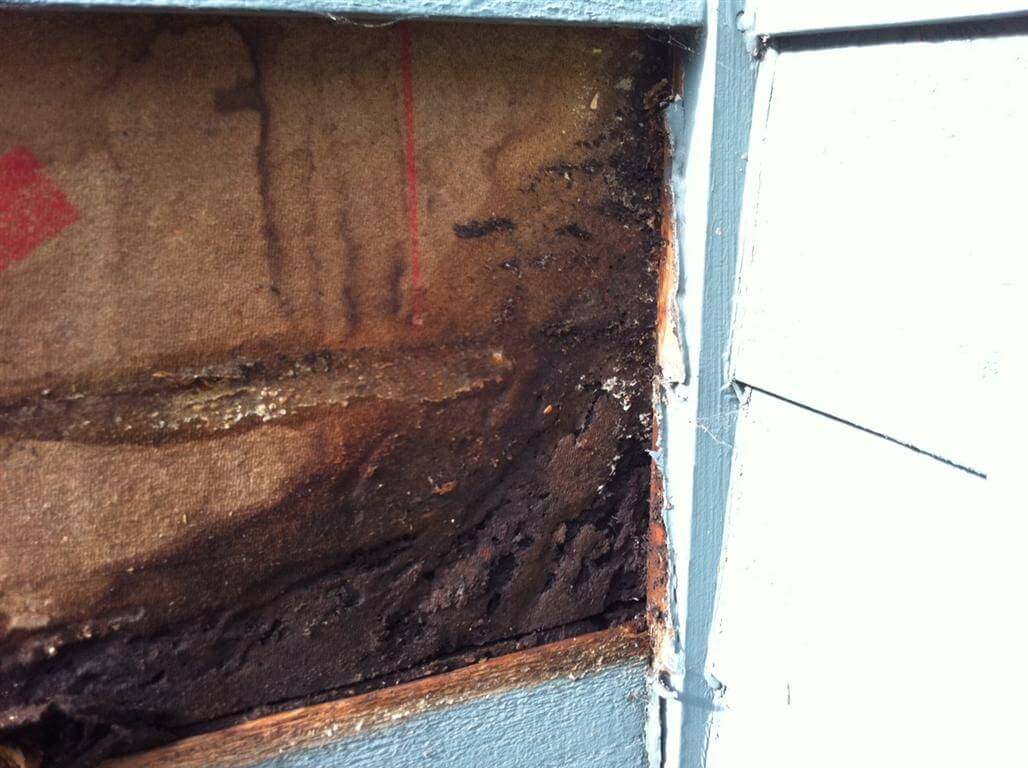
Rotted wall sheathing
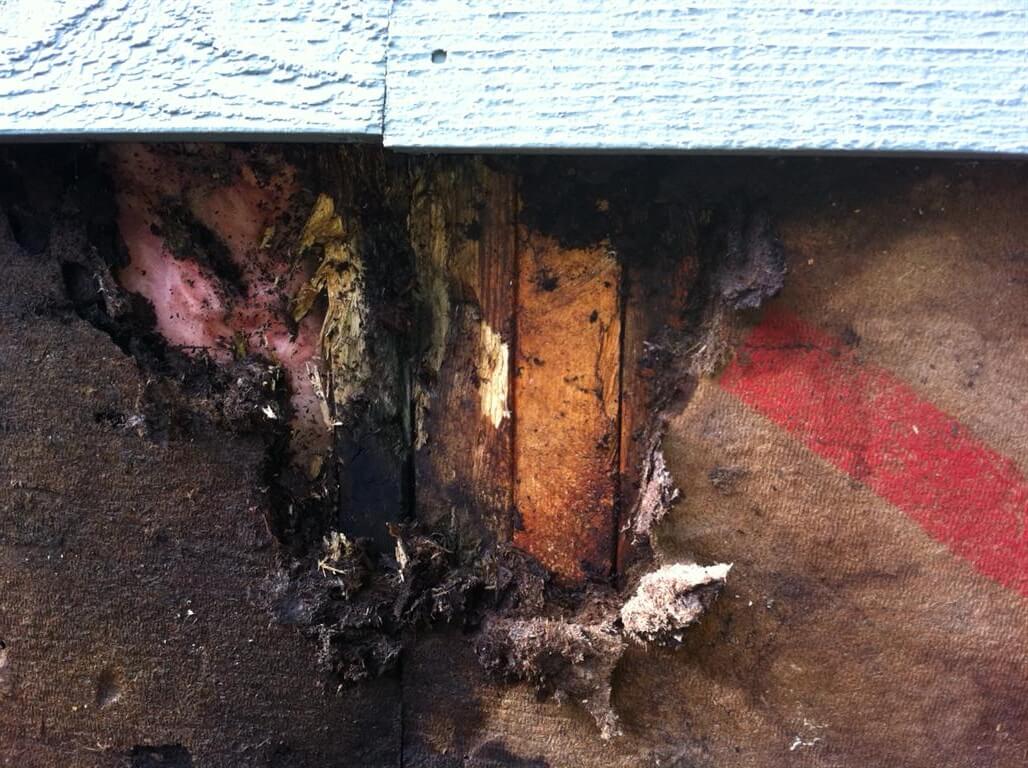
Rotted studs
That wall sheathing is severely deteriorated, and a few of the studs were actually mushy.  I’m certain that gutters would have prevented this entire mess.  This is just one more reason to install gutters.
Reuben Saltzman, Structure Tech Home Inspections - Email - Home Inspector Eden Prairie
Facebook Reuben's LinkedIn Page Follow StructureTech on Twitter ASHI Certified Home Inspector - Click To Verify Click to subscibe to Reuben's Blog

Monday, April 26, 2010

HRVs, Part 1 of 3: Why Houses Need Them & What They Do

Many months ago I wrote a blog about how houses can often havemoisture problems when old furnaces are replaced with high efficiency furnaces. The fix that I mentioned at the end of the blog was to install a Heat Recovery Ventilator, or HRV.  The character in that blog finally got around to installing an HRV in his house, and solved all his moisture problems! For the first time since he installed his high efficiency furnace, he no longer has condensation on his windows during the winter, and he couldn't be happier about it.
Today I'll share some basic information about how HRVs operate and why they're needed in today's newer, tighter houses.
New Houses Don't Breathe As most people know, new houses are constructed much tighter than they used to be - they don't leak air all over the place.  I've heard a lot of old-school home inspectors and building contractors complain about this, and you probably have too.  The rant goes something like this: "We build houses so damn tight that they don't breathe, and they end up rotting from the inside out!  Things were a lot better when we didn't have all these stupid house wraps."
These cranky doom sayers are only partially right - yes, we build houses tighter today, but we've also figured out how to prevent mold and moisture problems, and how to improve indoor air quality.  This is where HRVs come in.
HRVs Provide Fresh Air An HRV works by constantly bringing fresh air in to a house and exhausting stale air.    The air that gets brought in to the house gets passed through a screen at the exterior, then through a filter inside the unit, then through the HRV core, which is actually a heat exchanger.  The heat exchanger allows the fresh outdoor air to get warmed by stale indoor air right before the indoor air gets exhausted to the exterior.  This allows about 60 - 80% of the heat in the air to be re-captured.  The diagram below illustrates this principal.
HRV Heat Exchanger
To understand how an HRV works, interlock your fingers together and picture warm air flowing through fingers in one hand, and cold air flowing through the fingers in the other hand.
Interlocked Fingers2

HRVs Remove Moisture 
Besides providing fresh air, HRVs also remove a lot of moisture from the air.  Old, drafty houses get dry in the winter because they're leaky, and the moist indoor air is always getting replaced with dry outdoor air.  Not so with newer houses - they stay humid during the winter, and HRVs are often needed just to get rid of all the excess humidity.  As the warm, moist air passes by the cold air, the moisture will condense.  This is why HRVs have a drain running out the bottom.
HRV Basics SuperVentor HRV

HRVs Lower Radon Levels Because HRVs constantly change out the air in a house, an HRV will reduce radon levels when working properly.  During a recent Eden Prairie home inspection that I also performed aradon test at, I had the HRV running during the majority of the radon test, but I tripped the GFCI outlet for the last hour of the radon test during my inspection.  Look at the jump in radon levels at the house from NOT having the HRV running!  Any time a radon test is performed, if there is an HRV present at the house, it should be up and running throughout the duration of the radon test.
Radon Graph
HRVs Have Many Names If you hear any of these terms, someone is probably talking about an HRV:
  • Air-to-air heat exchanger
  • Air exchanger
  • Whole house ventilator
  • Big square thingy in the furnace room
  • VanEE system (brand name)
  • ERV
The last one, ERV, stands for Energy Recovery Ventilator.  These are similar to HRVs, but ERVs are pretty rare here in Minnesota - I think I've seen two of them, ever.  They're designed for more humid, southern climates.
If you don't have an HRV at your house and you think you need one, you could always just turn on an exhaust fan and leave it running.  This will be very inefficient, but it will change out the air in your house.  I call this the Poor Man's HRV.
Next week I'll talk about the maintenance needs of HRVs, and the week after that I'll discuss installation defects.

Reuben Saltzman, Structure Tech Home Inspections - Email - Eden Prairie Home Inspections